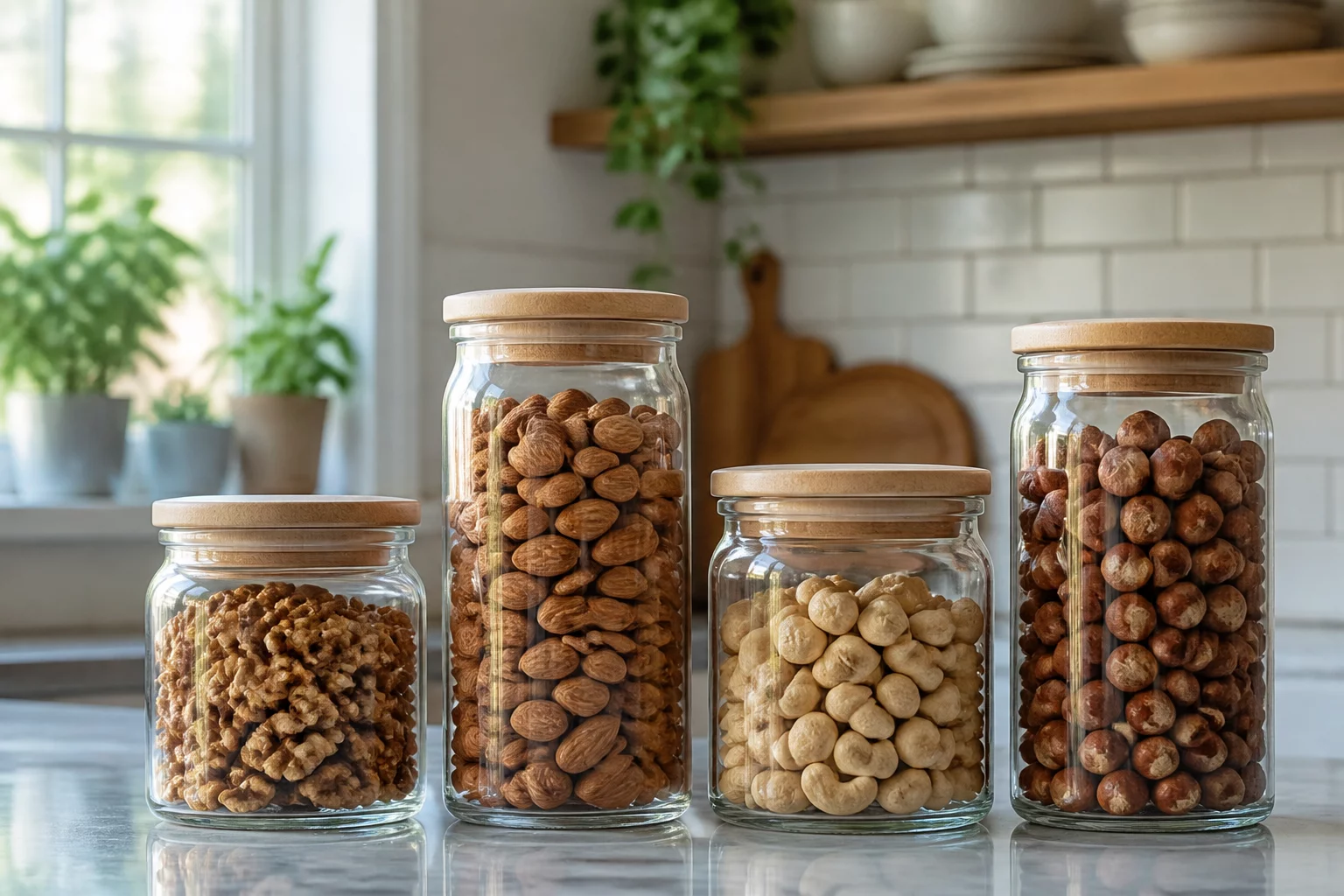
Whole nuts are celebrated for wholesome unsaturated fats, crisp texture, and rich earthy taste. However, these beneficial polyunsaturated and monounsaturated fatty acids make raw kernels vulnerable to oxidation. Exposure to ambient air, fluctuating room heat, and excessive light steadily breaks down their natural quality, turning delicious almonds or walnuts bitter and stale over time.
Essential Freshness Takeaway
Store nuts in airtight containers away from heat sources and direct sunlight. For prolonged freshness past three months, transfer your batches to the refrigerator or freezer.
Key Environmental Factors Influencing Nut Quality
Keeping nuts crisp and aromatic requires minimizing exposure to the three main catalysts of spoilage: heat, moisture, and free oxygen. Selecting the right container and storage location creates an effective barrier against premature deterioration.
- Seal kernels in glass jars or thick zip pouches to block atmospheric oxygen and moisture.
- Place short-term pantry portions in a dark, temperature-stable cupboard away from the stove.
- Keep nuts isolated from pungent pantry goods like onions or spices because kernels readily absorb ambient odors.
Pantry, Fridge, or Freezer: Practical Guidelines
Pantry storage works well for nuts you consume within two to four weeks. If you buy in bulk or keep varieties with higher polyunsaturated fat contents such as shelled walnuts and pine nuts, low temperatures deliver far superior longevity.
Optimal Freezing Technique
Divide bulk bags into smaller weekly portions before freezing. This prevents condensation from forming on the kernels when retrieving a single serving from the freezer.
Taking a few moments to organize your pantry supplies protects your culinary investment and ensures every snack or recipe retains its pure, wholesome flavor profile.